

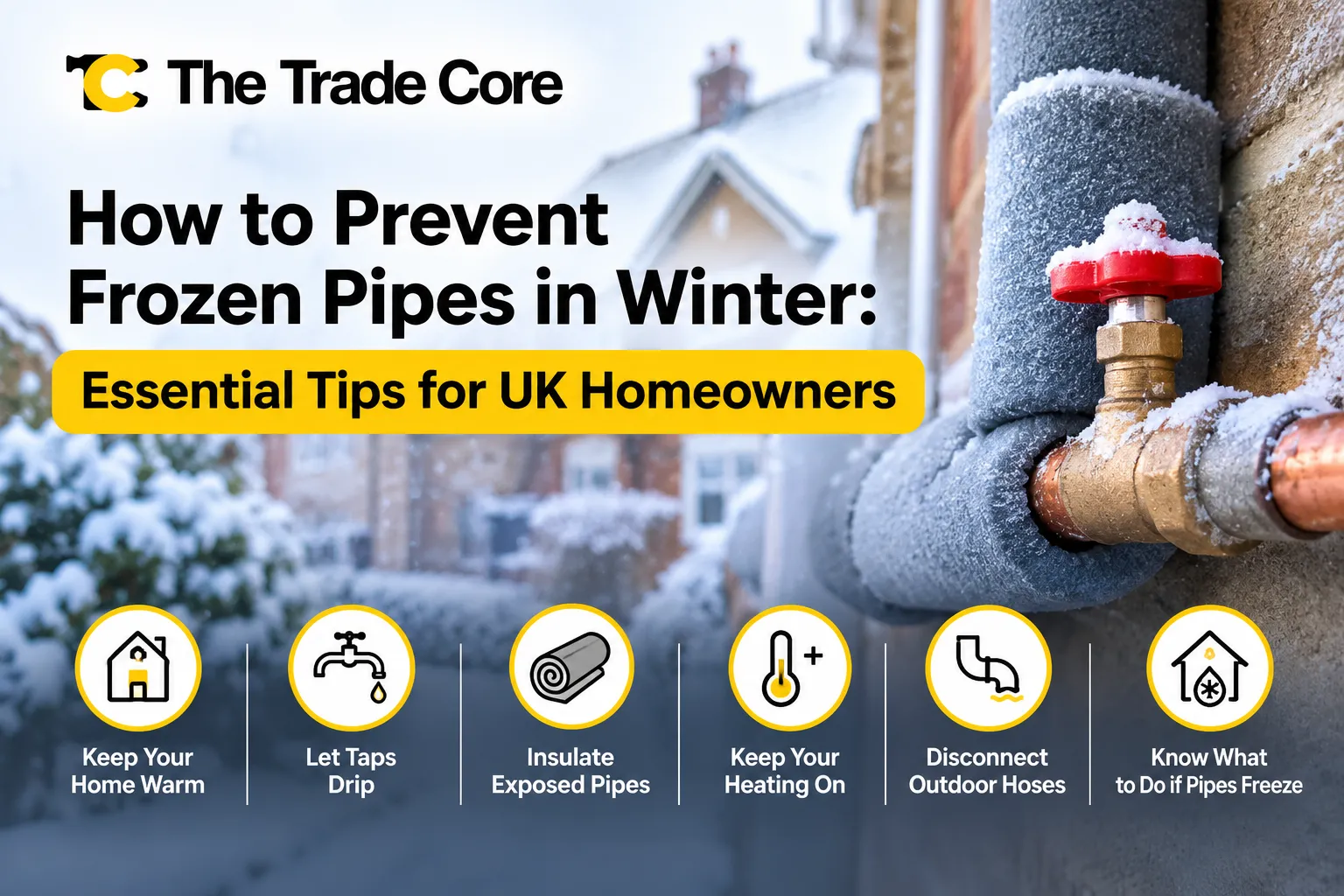
Frozen water pipes are a common winter problem for UK homeowners, particularly when temperatures drop below freezing overnight. When water freezes inside a pipe, it expands, increasing pressure and potentially causing cracks, leaks or burst pipes. The damage can lead to flooding, expensive repairs and disruption to your household.
The good news is that a few preventative measures can significantly reduce the risk. Knowing how to prevent frozen pipes, insulating exposed plumbing and keeping your home warm can help protect your property throughout the colder months.
In this guide, we explain practical ways to protect water pipes from freezing, what to do if your pipes freeze and when to call a professional plumber.
How Can You Prevent Frozen Pipes?
The best way to prevent frozen pipes is to insulate exposed plumbing, maintain a consistent indoor temperature and protect outdoor taps during cold weather.
Here are the most effective preventative measures:
- Insulate water pipes in lofts, garages, cupboards and other unheated spaces.
- Keep your heating running at a low temperature when away during winter.
- Open kitchen and bathroom cupboard doors to allow warm air to circulate around pipes.
- Disconnect and drain garden hoses before freezing temperatures arrive.
- Insulate outdoor taps and exposed pipework.
- Know where your main water stopcock is located.
- Check pipes regularly for signs of damage or leaks.
Taking these precautions before temperatures fall can help prevent costly plumbing emergencies.
1. Insulate Exposed Water Pipes
Insulating water pipes is one of the most effective ways to prevent water pipes from freezing during winter.
Pipes located in unheated areas are particularly vulnerable because they are exposed to colder temperatures. Common locations include:
- Loft spaces and attics
- Garages and sheds
- Basements and cellars
- Under kitchen sinks
- External walls and utility rooms
Use suitable pipe insulation, commonly called pipe lagging, to cover exposed sections. Ensure the insulation fits properly and covers bends, joints and vulnerable connections.
Also check the insulation around cold-water tanks and pipes in lofts, as these areas can become particularly cold during prolonged freezing weather.
2. Keep Your Home Warm During Cold Weather
Maintaining a consistent indoor temperature helps protect plumbing, especially pipes running through external walls and poorly heated rooms.
If you are staying at home, avoid allowing rooms containing water pipes to become excessively cold.
If you are travelling during winter:
- Keep your central heating running at a low temperature.
- Set your heating timer to operate regularly.
- Ask someone to check your property if you will be away for an extended period.
- Consider draining the plumbing system if the property will remain unoccupied for a long time, using professional advice where necessary.
Even when you are not using hot water, maintaining some background heat can help protect your plumbing system.
3. Protect Outside Taps from Freezing
Outdoor taps are particularly exposed to freezing temperatures because they are directly affected by cold weather.
To stop outside taps from freezing:
- Disconnect garden hoses and other attachments.
- Turn off the internal isolation valve supplying the outdoor tap, if fitted.
- Open the outside tap to drain any remaining water.
- Fit an insulated tap cover to provide additional protection.
- Check exposed outdoor pipework for gaps or damage to insulation.
Leaving water inside an exposed outdoor pipe can increase the risk of freezing and potential pipe damage.
4. Open Cupboards to Improve Air Circulation
Pipes underneath kitchen and bathroom sinks can become cold, particularly when cupboards are positioned against external walls.
Opening cupboard doors during particularly cold weather allows warmer air from the room to circulate around the plumbing.
This is a simple precaution that can help protect vulnerable pipes without requiring additional equipment.
5. Check Your Plumbing Before Winter Arrives
A pre-winter plumbing inspection can help identify potential problems before freezing temperatures cause damage.
Check the following areas:
- Look for missing or damaged pipe insulation.
- Inspect exposed pipes for cracks or corrosion.
- Check taps and connections for minor leaks.
- Ensure outdoor tap isolation valves work correctly.
- Locate and test access to your main stopcock.
- Check that loft tanks and exposed plumbing are properly protected.
If you notice damaged pipework or are unsure whether your insulation is sufficient, consider arranging an inspection with a qualified local plumber.
You can also explore our winter home maintenance checklist for additional ways to prepare your property for colder weather.
What Should You Do When Pipes Freeze?
If you suspect a water pipe has frozen, act carefully. Attempting to force water through a frozen pipe or applying excessive heat can make the situation worse.
Follow these steps:
- Turn off your water supply: Locate your main stopcock and turn it off if you suspect a pipe has burst or is leaking.
- Open the affected tap: This helps relieve pressure and allows water to escape as the ice melts.
- Identify the frozen section: Check exposed pipes in lofts, garages and cupboards.
- Thaw the pipe gently: Use a warm towel or hot-water bottle to gradually warm the affected section.
- Check for leaks: Once the ice melts, inspect the pipe carefully for cracks or escaping water.
Never use a blowtorch, naked flame or boiling water to thaw frozen pipes. Sudden temperature changes and excessive heat can damage plumbing and create additional hazards.
If you cannot locate the frozen section or are unsure how to deal with it safely, contact a professional plumber.
Frozen Pipes vs Burst Pipes: What’s the Difference?
Understanding the difference between frozen and burst pipes can help you decide what action to take.
|
Frozen Pipes |
Burst Pipes |
| Water flow may stop or become restricted. | Water may leak or spray from damaged pipework. |
| Pipes may feel unusually cold. | Visible cracks, leaks or water damage may appear. |
| Ice may be present inside the pipe. | Water pressure may drop significantly. |
| Gentle thawing may restore water flow if no damage has occurred. | The water supply should be isolated and repairs arranged urgently. |
A frozen pipe does not always burst, but freezing can cause pressure to build up and damage the pipe. Always inspect the plumbing carefully after thawing.
If a pipe has burst, turn off the main water supply, drain the system where safe to do so and contact an emergency plumber. If water is near electrical sockets or appliances, avoid the affected area and isolate electricity only if it is safe.
For additional plumbing guidance, see our article on waste pipe installation and associated costs.
When Should You Call a Professional Plumber?
Some frozen pipe problems can be managed with careful thawing, but others require professional attention.
Contact a plumber if:
- You suspect a pipe has burst or developed a leak.
- Water does not return after safely thawing an accessible pipe.
- Frozen pipework is located behind walls or beneath flooring.
- You notice damp patches, water stains or unusual drops in water pressure.
- Your heating or plumbing system stops working properly after freezing conditions.
A professional can identify the affected section, assess potential damage and recommend appropriate repairs or insulation.
If you need help finding a tradesperson, The Trade Core makes it easier to connect with local professionals across the UK. You can explore the plumbing services directory to find relevant tradespeople for your property maintenance needs.
Frequently Asked Questions
At What Temperature Do Water Pipes Freeze?
Water freezes at approximately 0°C. However, exposed or poorly insulated pipes can become vulnerable when surrounding temperatures remain below freezing, particularly overnight.
Should I Leave My Heating On to Prevent Frozen Pipes?
Yes. Keeping your heating on at a low setting when you are away during winter can help prevent indoor temperatures from dropping too far. Using a heating timer or frost protection setting can also help.
How Long Does It Take for Pipes to Freeze?
There is no fixed timeframe. It depends on the outside temperature, pipe location, insulation, exposure to cold air and how long freezing conditions continue. Exposed pipes can freeze more quickly than well-insulated indoor plumbing.
How Can I Thaw Frozen Pipes Safely?
Turn off the water supply if a leak is suspected, open the affected tap and gently warm accessible frozen sections using a warm towel or hot-water bottle. Avoid naked flames, blowtorches and boiling water.
Can Frozen Pipes Burst Even After They Have Thawed?
Yes. Ice can cause cracks or damage that may only become noticeable once the water starts flowing again. Inspect the pipework carefully after thawing and contact a plumber if you notice leaks or water damage.
Should I Turn Off My Water Supply When Going on Holiday in Winter?
If you are leaving your property for an extended period during winter, turning off the water supply and draining the plumbing system may help reduce the risk of water damage. Seek professional advice if you are unsure how to do this, particularly if your heating system requires a continuous water supply.
Conclusion
Preventing frozen pipes is much easier than dealing with the damage they can cause. Insulating exposed plumbing, maintaining background heating, protecting outdoor taps and checking your pipework before winter are some of the most effective ways to protect your home.
If you discover frozen or damaged plumbing that requires professional attention, finding a reliable tradesperson is essential.
With The Trade Core, UK homeowners can explore local tradespeople, compare options and connect with professionals for plumbing repairs and property maintenance. Find a trusted local tradesperson through The Trade Core and get your home ready for winter.