

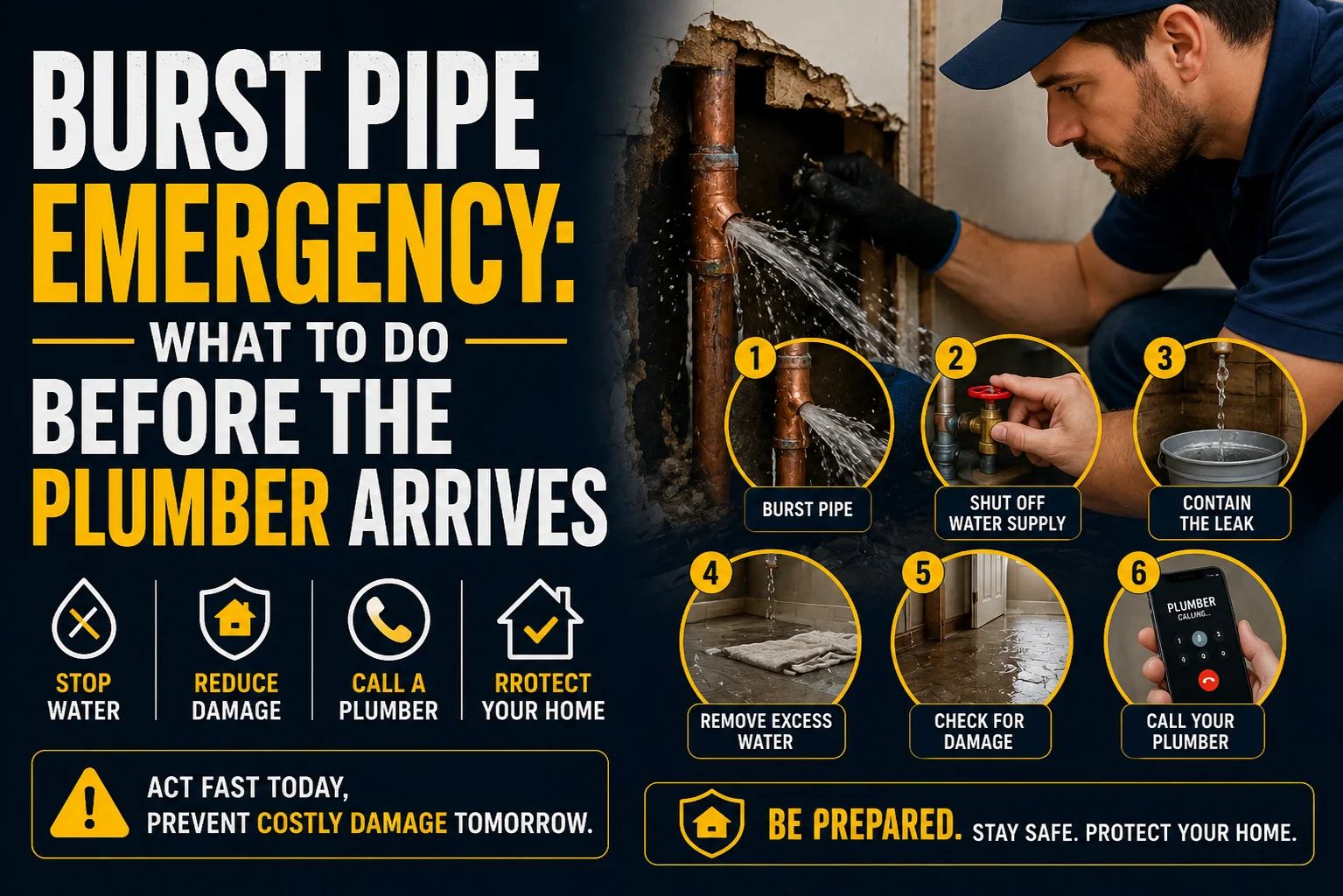
A burst pipe emergency is one of the most stressful situations a homeowner can face. Within minutes, escaping water can damage flooring, walls, ceilings, furniture, and even your home’s electrical system.
The good news is that the first few minutes after discovering a burst pipe can make a huge difference. Knowing how to react quickly can reduce damage, improve safety, and even lower your repair costs.
In this guide, we’ll explain exactly what to do during a burst pipe emergency, when to call a professional plumber, and how to prevent the same problem from happening again.
What Causes a Burst Pipe?
Although burst pipes often seem to happen without warning, they usually develop because of an underlying issue.
Some of the most common causes include:
- Freezing temperatures causing water inside pipes to expand
- Corroded or ageing pipework
- Excessively high water pressure
- Poor installation or old plumbing fittings
- Accidental damage during home improvements
- Blockages that increase pressure inside the pipe
How to Know if You Have a Burst Pipe
Sometimes the damage is obvious. In other cases, a pipe may burst behind a wall or beneath flooring, making the warning signs more subtle.
Watch for:
- Sudden loss of water pressure
- Water stains on ceilings or walls
- Damp patches that continue to grow
- Puddles forming without explanation
- The sound of running water when no taps are on
- A sudden increase in your water bill
- Water leaking through ceilings or around light fittings
Many of these warning signs are also discussed in our guide on 10 Plumbing Problems You Should Never Ignore in Your Home, where we explain how small plumbing issues can quickly become expensive repairs.
Step 1: Turn Off Your Main Water Supply Immediately
This is the single most important thing you should do.
As soon as you discover a burst pipe, locate your property’s stopcock (also called the stop tap) and turn it off to stop more water from entering your plumbing system.
In most UK homes, the internal stopcock is commonly located:
- Under the kitchen sink
- Inside a utility room
- Beneath the stairs
- In a downstairs cupboard
- Near where the water supply enters the property
Step 2: Turn Off Your Boiler
If your heating system relies on the same water supply, switch your boiler off after shutting off the water.
Running a boiler without sufficient water may damage internal components and create additional repair costs.
Once the water supply has been isolated, wait until a qualified plumber has inspected the system before switching the boiler back on.
Step 3: Drain the Remaining Water
Even after turning off the stopcock, water will still remain inside your pipework.
Open your cold taps first, followed by your hot taps, to allow the remaining water to drain safely from the system.
You should also flush your toilets once if possible.
This helps reduce pressure inside the pipes and limits the amount of water escaping from the damaged section.
Step 4: Protect Your Home from Further Damage
Once the water flow has stopped, focus on limiting damage inside your property.
You can:
- Use towels to absorb standing water.
- Place buckets beneath active leaks.
- Move rugs, furniture and electrical items away from affected areas.
- Open windows where appropriate to improve ventilation.
- Begin drying wet flooring if it is safe to do so.
Step 5: Stay Safe Around Electricity
Water and electricity are an extremely dangerous combination.
If water is leaking near:
- Plug sockets
- Consumer units
- Electrical appliances
- Light fittings
- Wiring
avoid touching anything electrical.
Step 6: Call a Professional Plumber
After you’ve made the property safe, it’s time to contact a qualified plumber.
Temporary DIY repairs may slow a leak, but they rarely solve the underlying problem.
If you’re looking for experienced professionals, The Trade Core helps homeowners connect with trusted Plumbing Services for everything from emergency repairs to complete pipe replacements.
If you’re also wondering what the repair might cost, our Plumber Cost in the UK: Average Prices & Call Out Fees guide explains the typical charges for emergency plumbing work.
What NOT to Do During a Burst Pipe Emergency
When faced with a burst pipe emergency, it’s easy to panic and make decisions that can make the situation worse.
Avoid these common mistakes:
- Don’t ignore a small leak, hoping it will stop on its own.
- Don’t switch your boiler back on until the plumbing system has been inspected.
- Don’t use electrical appliances if water has reached sockets or wiring.
- Don’t attempt permanent repairs with tape, sealant, or DIY repair kits. These are only temporary solutions.
- Don’t delay calling a professional plumber, especially if water is continuing to escape.
How Professional Plumbers Repair Burst Pipes
Once your plumber arrives, they’ll first identify the exact location and cause of the burst.
Depending on the damage, they may:
- Replace the damaged section of pipe.
- Install new pipe fittings or joints.
- Repair pressure-related issues.
- Check for additional hidden leaks.
- Test the plumbing system before restoring your water supply.
- Inspect surrounding pipework if the burst was caused by freezing or corrosion.
If the burst pipe has damaged walls, ceilings, or flooring, your plumber may also recommend further inspections to ensure there are no hidden moisture problems.
How to Prevent Burst Pipes in the Future
While not every plumbing emergency can be avoided, a few preventative measures can significantly reduce the risk.
Insulate Exposed Pipes
Pipes in lofts, garages, basements, and other unheated spaces are far more likely to freeze during winter.
Adding pipe insulation is one of the simplest and most effective ways to reduce the risk of freezing.
Keep Your Home Warm
If you’re leaving home during colder months, avoid turning the heating off completely.
Keeping your heating at a low, consistent temperature helps prevent water inside pipes from freezing.
Know Where Your Stopcock Is
Every homeowner should know:
- Where the stopcock is located.
- How to turn it off.
- That it still works properly.
Experts recommend checking it every few months so it doesn’t seize up when you need it most.
Arrange Regular Plumbing Inspections
Older homes often have ageing pipework that may show signs of corrosion long before a pipe bursts.
A routine inspection can identify worn fittings, slow leaks, and weak joints before they become emergencies.
When Should You Call an Emergency Plumber?
Some plumbing issues can wait until normal working hours.
A burst pipe emergency usually can’t.
Call an emergency plumber immediately if you notice:
- Water pouring from a pipe.
- A ceiling actively leaking.
- Flooding inside your property.
- Water reaching electrical sockets or appliances.
- A complete loss of water pressure caused by a suspected burst pipe.
- A leak you cannot isolate using the stopcock.
Acting quickly can significantly reduce water damage and shorten repair times.
If you’re looking for trusted local professionals, browse the Plumbing Services available through The Trade Core. Our directory helps homeowners connect with experienced plumbers for both planned work and emergency repairs.
Final Thoughts
A burst pipe emergency can happen without warning, but knowing what to do in those first few minutes can protect both your home and your wallet.
The key steps are simple:
- Turn off the water supply.
- Switch off your boiler.
- Drain the plumbing system.
- Protect your belongings.
- Stay away from electrical hazards.
- Contact a qualified plumber immediately.
No. Even if the water flow appears to stop, the damaged pipe still requires professional repair or replacement. Temporary fixes should never be considered a permanent solution.
Is a burst pipe covered by home insurance?
Many UK home insurance policies cover sudden burst pipes and the resulting water damage, but the level of cover varies between insurers. It’s a good idea to review your policy and document any damage before repairs begin.
Should I turn my boiler off if a pipe bursts?
Yes. Once you’ve turned off the main water supply, switch off your boiler to help prevent damage to the heating system.
Can I temporarily repair a burst pipe myself?
Emergency repair tape or pipe repair clamps may reduce the leak temporarily, but they should only be used until a qualified plumber can carry out a permanent repair.
How can I prevent pipes from bursting during winter?
Insulate exposed pipes, keep your heating on at a low temperature during cold weather, know where your stopcock is, and arrange regular plumbing inspections for older properties.
Who should I call during a burst pipe emergency?
Contact a qualified emergency plumber as soon as you’ve made your property safe. If water has reached electrical wiring or sockets, avoid touching electrics and seek professional assistance immediately.