

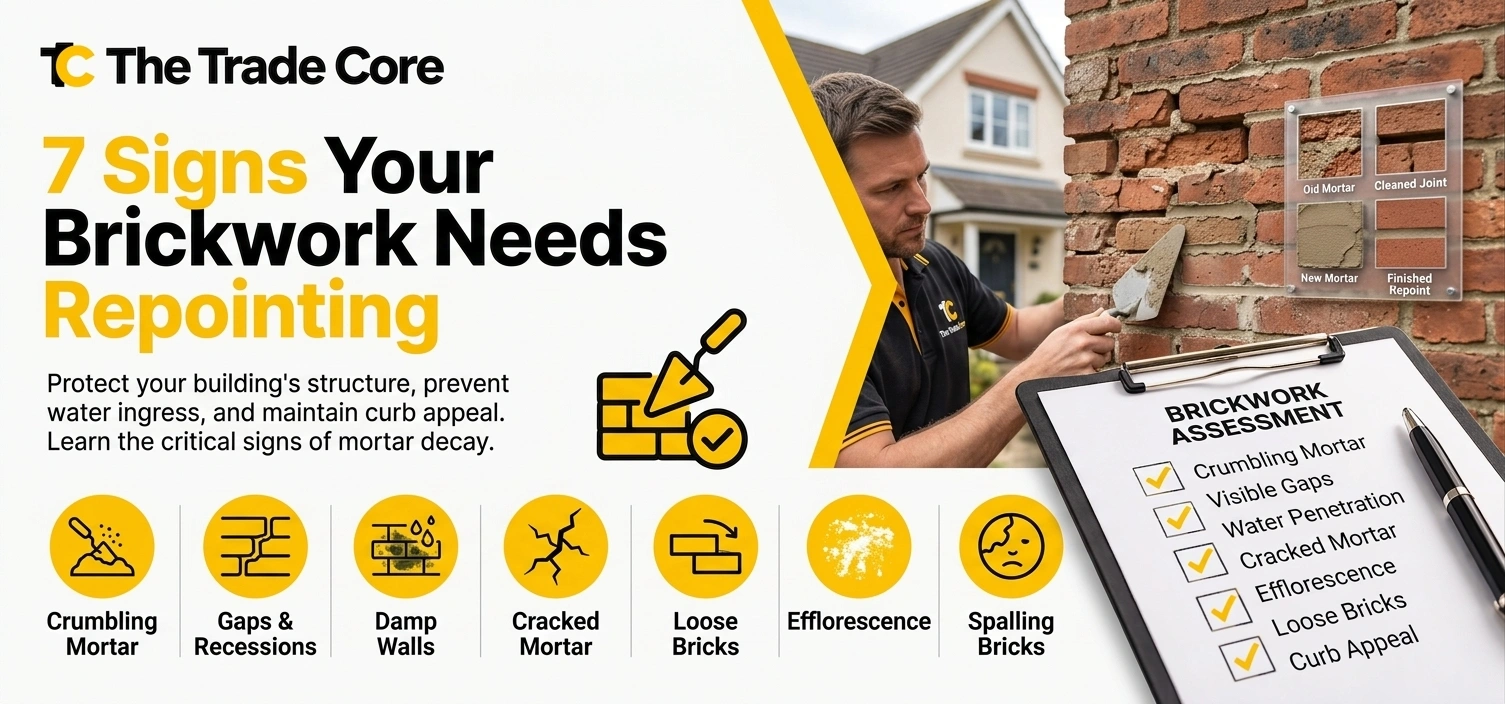
Small cracks in your brickwork won’t fix themselves. Left too long, they turn into a much bigger, much pricier job. The good news is your walls usually give you plenty of warning first, if you know what to look for. Here are 7 signs worth checking today.
1. Crumbly, Powdery Mortar
Run your finger along a mortar joint. If it turns to dust or crumbles easily, the mortar’s had it. This tends to happen slowly, as years of rain and weather wear it down, and it’s usually the very first sign homeowners notice, often before anything looks obviously wrong.
2. Gaps Between the Bricks
Good mortar sits level with the brick. Once it’s worn back and left a visible gap, water finds it much easier to get inside the wall. It’s worth getting this checked properly by local bricklayers rather than guessing from the ground, since how deep the gap is tells an expert how urgent the fix really is.
3. Cracks Along the Mortar Lines
A crack that follows the mortar, not the bricks themselves, is usually less serious. But it’s still worth sorting out sooner rather than later. Left alone, these cracks widen over time and let more water in every time it freezes and thaws.
4. Damp Patches Showing Up Inside
Seen a damp patch on a wall inside your home that backs onto brickwork outside? Worn pointing is one of the most common causes. Water getting in through gaps in the mortar can travel through the wall and show up as staining, a musty smell, or peeling paint, often before the outside even looks that bad.
5. Loose or Missing Bricks
Once mortar’s broken down enough, bricks themselves can start working loose or dropping out completely. That’s a clear sign the wall needs more than a quick patch. A lot of this comes down to how the wall was originally built too, so our piece on common bricklaying mistakes is worth a read if you’re curious what usually goes wrong in the first place.
6. Moss, Weeds or Plants Growing in the Joints
A little moss can look nice on an old wall, but plants growing in the mortar are rarely harmless. Roots push into small gaps and make them bigger over time. And the damp that lets moss grow there in the first place is often a sign the mortar’s already holding more water than it should.
7. Draughts or Light Coming Through the Wall
In the worst cases, you might actually feel a draught coming through an outside wall, or spot daylight through a gap where mortar’s fallen away completely. This is a later sign, not an early one, and it usually means the job is well overdue rather than optional.
Why This Actually Matters
Repointing isn’t just about looks, even though a tidy wall does look better. Mortar is meant to take the wear and tear so the bricks don’t have to. Once mortar breaks down and isn’t replaced, water gets into the brickwork instead, and fixing damaged bricks costs a lot more than fixing mortar ever does.
What a Repointing Job Actually Involves
A proper job starts with digging out the old, broken mortar to an even depth, not just skimming the surface. New mortar then gets packed in and finished to match the rest of the wall. Getting the mortar mix and colour right for the age of your home matters too, since the wrong mix can make things worse on an older wall instead of protecting it.
How Much Does Repointing Cost
Prices depend on how much of the wall needs doing and how easy it is to reach. A single chimney is a very different job to a whole side of the house needing scaffolding up, and access alone can make a bigger difference to the final price than most people expect. Our guide on what bricklayers charge per day breaks this down in more detail if you want a clearer idea of what to budget for.
Weather affects timing too. Most bricklayers avoid working in freezing temperatures, since mortar needs time to set properly before frost can damage it, so a job booked for midwinter might get pushed back a little depending on the forecast.
Finding Local Brickwork Contractors
Once you’ve spotted one or more of these signs, the next step is getting it looked at properly. A search for local bricklayers near me, brickwork contractors near me, or brickwork contractors London will bring up plenty of names, but it’s worth comparing a few before you pick one. The Trade Core’s directory lets you browse checked tradespeople instead of starting from a cold search with no context.
Choosing the Right Bricklayer for the Job
Not every bricklayer takes on repair and repointing work the same way they’d take on a new build. Ask to see photos of similar jobs, check reviews properly, and get a written quote before anyone starts, since a number that shifts once someone’s on site is rarely a good sign. If you want the full picture on vetting someone properly, our guide on how to find a good bricklayer covers this step by step.
Got Other Jobs on the List Too
Brickwork problems rarely show up on their own. Damp inside often means a room needs redecorating once the wall’s fixed, and older properties tend to need more than one trade sorted at the same time. It’s worth browsing The Trade Core’s full services list if your to-do list is longer than just the brickwork, since booking everything through one place tends to be simpler than juggling separate searches for local bricklayers and every other trade involved.
If You’re a Bricklayer Reading This Instead
Everything above is written for homeowners spotting these signs on their own home, but if you’re a bricklayer after more work rather than someone hiring one, you can join as a tradesperson through The Trade Core and get matched with homeowners looking for exactly this kind of job.
If you’re the one hiring, the same idea applies either way. Spotting problems early and getting them checked properly saves far more than waiting until the wall makes the decision for you.
Ready to get quotes from checked professionals? Hire a tradesperson through The Trade Core and compare local bricklayers without the usual hassle.
Conclusion
Brickwork rarely fails without warning first. Crumbling mortar, gaps between bricks, damp patches, and loose bricks are all signs worth acting on before the fix gets more expensive. Visit The Trade Core to compare checked bricklayers near you and get it sorted before the wall makes the decision for you.
FAQs
How do I know if it’s repointing or something more serious?
Cracks that follow the mortar lines are usually just a pointing issue. Cracks running straight through the bricks, especially if they’re getting wider, are worth getting checked by a structural professional instead.
Can I repoint brickwork myself?
Small, easy-to-reach patches are sometimes doable if you’re confident with DIY. Getting the mortar mix and colour right on an older wall is easy to get wrong, though, and a bad match can trap damp rather than stop it.
How long does repointing take?
A small job, like one wall or a chimney, can often be done in a day or two. A full house exterior, especially with scaffolding involved, usually takes one to two weeks depending on size and weather.
Does repointing get rid of damp completely?
It fixes one common cause, water getting in through worn mortar, but not every damp problem starts there. If damp carries on afterwards, it’s worth checking for other causes like a damaged damp-proof course.