

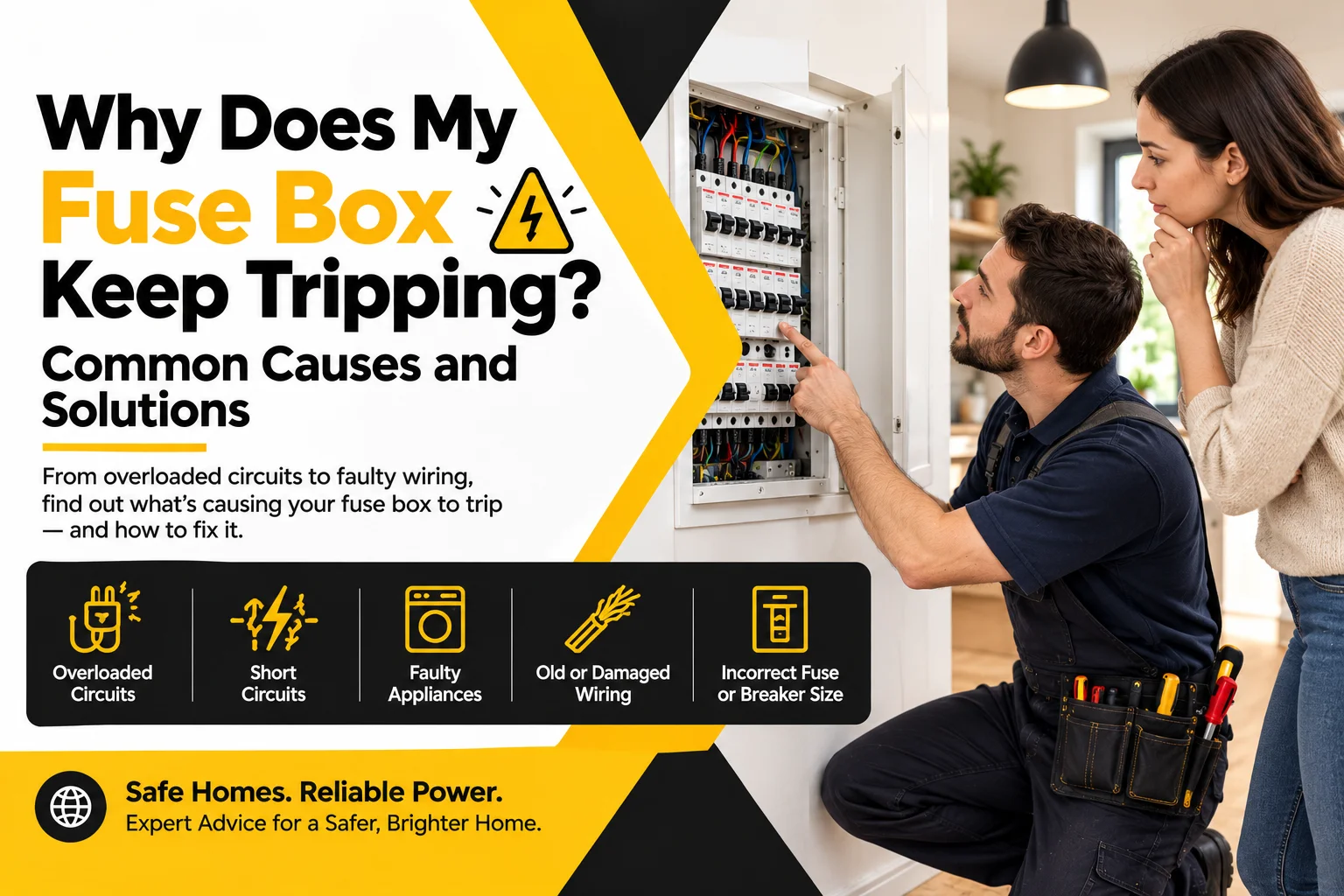
If your fuse box keeps tripping, it is usually a sign that an electrical circuit has detected a fault and has switched off the power for safety. Common causes include overloaded circuits, faulty appliances, damaged wiring, short circuits, or a problem with the consumer unit itself.
A one-off trip may be caused by a temporary fault, but repeated tripping should not be ignored. This guide explains the common causes, what you can safely check, and when to find a qualified electrician.
Why Does a Fuse Box Keep Tripping?
A fuse box or consumer unit can keep tripping because of:
- An overloaded electrical circuit
- A faulty appliance or plug
- Damaged or deteriorating wiring
- A short circuit
- Electrical faults caused by moisture
- A faulty circuit breaker or consumer unit
If the same circuit keeps tripping after you reset it, avoid repeatedly switching it back on. Disconnecting appliances and identifying the affected circuit can help narrow down the problem, but persistent faults should be investigated by a qualified electrician.
What Is a Fuse Box or Consumer Unit?
A modern fuse box consumer unit is the central point where your home’s electrical circuits are protected. While people commonly still say “fuse box”, modern UK homes generally use consumer units containing protective devices such as circuit breakers and residual current devices.
These devices are designed to disconnect electricity when they detect certain electrical faults. The trip is therefore a safety feature rather than simply an inconvenience.
If you are unsure what is causing the problem, a professional residential electrician can inspect the consumer unit and connected circuits.
5 Common Reasons Your Fuse Box Keeps Tripping
1. The Circuit Is Overloaded
Plugging too many high-power appliances into the same circuit can cause an overload. Kitchen appliances, heaters and other high-demand equipment can place considerable load on a circuit.
If the fuse box trips when several appliances are operating together, reduce the load and see whether the problem stops. If it continues, arrange an electrical inspection.
2. A Faulty Appliance Is Causing the Problem
Sometimes the electrical installation is fine and one appliance is responsible. A damaged cable, plug or internal component can cause a protective device to trip.
Unplug appliances connected to the affected circuit and, if the circuit remains stable, reconnect them one at a time. Stop using any appliance that repeatedly causes the circuit to trip.
3. There May Be a Short Circuit
A short circuit occurs when electricity takes an unintended path, potentially causing a protective device to disconnect the circuit quickly.
Short circuits can result from damaged cables, faulty sockets, loose connections or defective appliances. Because identifying the source can require specialist testing, contact a qualified local electrician if you suspect a wiring fault.
4. Damaged or Faulty Wiring
Old, damaged or deteriorating wiring can cause repeated electrical problems. Warning signs can include burning smells, buzzing sounds, scorch marks, warm sockets or unexplained power interruptions.
Do not attempt to repair damaged wiring yourself. Instead, arrange an inspection from a suitably qualified electrician.
5. Moisture or Water Has Reached an Electrical Circuit
Water and electricity are a dangerous combination. Moisture entering sockets, outdoor electrical equipment or wiring can cause protective devices to trip.
If you suspect water has affected an electrical installation, keep away from the affected equipment and seek professional assistance.
What Should You Do When Your Fuse Box Trips?
First, identify which circuit has switched off and unplug appliances that were recently being used. If it is safe to do so, you can reset the relevant breaker once.
If it trips again immediately, or continues to trip after appliances are disconnected, do not keep resetting it. The repeated trip may indicate an underlying electrical fault that requires professional testing.
For urgent electrical problems, searching for an emergency electrician near me can help you locate a professional who may be able to respond quickly.
When Should You Find an Electrician?
You should find an electrician near me if the fuse box keeps tripping, you notice signs of damaged wiring, or you cannot identify the cause safely.
Professional help is particularly important when you experience:
- Burning smells or scorch marks
- Sparks or unusual electrical noises
- Warm sockets or switches
- Repeated circuit trips
- Water near electrical equipment
- A complete or partial loss of power that cannot be resolved safely
The Trade Core can help homeowners connect with tradespeople for electrical and other home services. You can explore the platform’s electrician services when you need help with an electrical issue.
Fuse Box Tripping vs. a One-Off Trip
| Situation | Possible explanation | What to do |
| Trips once and stays on | Temporary fault or overload | Monitor the circuit |
| Trips when one appliance is used | Possible faulty appliance | Stop using the appliance |
| Trips repeatedly | Electrical fault or persistent overload | Arrange professional inspection |
| Trips with burning smell or sparks | Potentially serious electrical fault | Stop using the circuit and seek professional help |
| Trips after water exposure | Possible moisture-related fault | Avoid the affected area/equipment and seek professional assistance |
How Can You Find a Local Electrician?
If you need help diagnosing or repairing a recurring electrical problem, you can use The Trade Core to find local tradespeople. Comparing suitable professionals can help you choose someone appropriate for the work rather than repeatedly resetting a tripping circuit.
For additional guidance on choosing an electrician, see these related resources: benefits of hiring a certified electrician and tips for hiring a certified electrician near me in Croydon.
Frequently Asked Questions
Is it safe to keep resetting a tripping fuse box?
No. If a breaker repeatedly trips, there may be an underlying electrical fault. Avoid repeatedly resetting it and arrange professional inspection if the problem continues.
Can a faulty appliance make the fuse box trip?
Yes. A damaged or malfunctioning appliance can cause a circuit breaker or protective device to trip. Disconnecting appliances can help identify whether one is responsible.
Should I call an electrician if my fuse box keeps tripping?
Yes, particularly if the problem happens repeatedly or is accompanied by burning smells, sparks, damaged wiring, unusual noises or other warning signs.
What is the difference between a fuse box and a consumer unit?
“Fuse box” is a commonly used term for the home’s electrical distribution and protection equipment. Modern installations generally use consumer units containing circuit breakers and other protective devices.
Can an overloaded circuit cause a fuse box to trip?
Yes. Too many appliances drawing power from the same circuit can cause an overload, which may activate the circuit’s protective device.
Conclusion
A fuse box that keeps tripping should not simply be reset repeatedly. The cause could be an overloaded circuit or faulty appliance, but repeated trips can also indicate damaged wiring, a short circuit or another electrical problem.
If basic checks do not identify the cause, use The Trade Core to find a local electrician who can investigate the issue safely and carry out any necessary electrical work.