

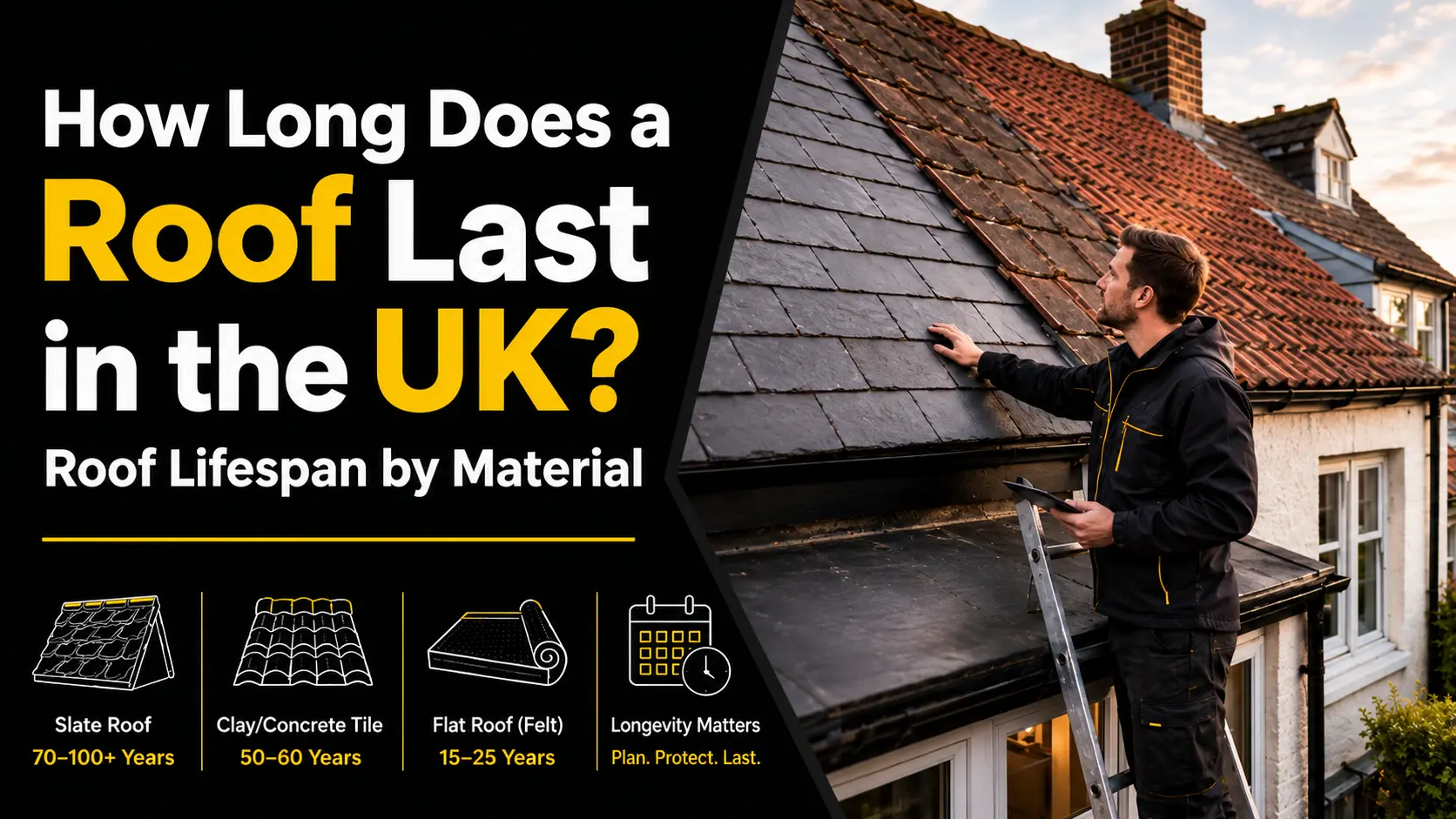
Your roof protects your home from rain, wind, snow, and changing temperatures every day of the year. While it’s built to withstand the UK’s unpredictable weather, no roof lasts forever. Over time, roofing materials naturally wear down, making regular maintenance and inspections essential.
One of the most common questions homeowners ask is, “How long does a roof last?” The answer depends on several factors, including the roofing material, the quality of installation, local weather conditions, and how well the roof has been maintained.
Understanding the typical roof lifespan UK homeowners can expect helps you plan, avoid unexpected repair costs, and recognise when it’s time to call a roofing professional.
In this guide, we’ll explain how long different roofing materials typically last, the factors that can shorten your roof’s lifespan, warning signs that your roof may need replacing, and practical ways to keep it in good condition for as long as possible.
What Is the Average Roof Lifespan UK Homeowners Can Expect?
There isn’t a single answer because every roof is different. However, most residential roofs in the UK last between 20 and 100 years, depending on the materials used and how well they’re maintained.
For example:
- Asphalt shingles generally have the shortest lifespan.
- Concrete roof tiles often last several decades.
- Clay tiles can remain in excellent condition for over half a century.
- Natural slate roofs can last well beyond 100 years when properly maintained.
Regular inspections and timely repairs can significantly increase the life expectancy of almost any roofing system.
Roof Lifespan by Roofing Material
Different roofing materials offer different levels of durability, maintenance requirements, and long-term value.
Slate Roofs
Natural slate is widely regarded as one of the longest-lasting roofing materials available.
Typical lifespan:
75 to 100+ years
Advantages include:
- Extremely durable
- Excellent weather resistance
- Low maintenance
- Attractive traditional appearance
- Excellent long-term investment
Although slate roofs have a higher upfront cost, their exceptional lifespan often makes them one of the most cost-effective options over several decades.
Clay Roof Tiles
Clay tiles have been used on British homes for centuries and continue to be popular because of their durability and classic appearance.
Typical lifespan:
60 to 100 years
Clay tiles perform particularly well against:
- Heavy rainfall
- Frost
- UV exposure
- High temperatures
Individual tiles may occasionally need replacing, but the roof itself can last for generations with proper maintenance.
Concrete Roof Tiles
Concrete tiles are commonly used throughout the UK because they provide a good balance between durability and affordability.
Typical lifespan:
40 to 60 years
Benefits include:
- Lower installation cost
- Strong resistance to wind
- Suitable for most UK weather conditions
- Widely available
Like all roofing materials, regular inspections help identify cracked or displaced tiles before water damage develops.
Asphalt Shingles
Although less common in the UK than in North America, asphalt shingles are still used on some residential properties.
Typical lifespan:
20 to 30 years
Their popularity comes from:
- Lower installation costs
- Quick installation
- Easy repairs
- Good short-term value
However, asphalt generally has a shorter lifespan than slate, clay, or concrete roofing.
Flat Roofs
Flat roofs are widely used on extensions, garages, and commercial buildings.
Their lifespan varies depending on the membrane installed.
Typical lifespan:
20 to 40 years
Modern materials such as EPDM rubber and fibreglass generally outperform older felt roofing systems and require less maintenance over time.
Metal Roofs
Metal roofing has become increasingly popular thanks to its durability and energy efficiency.
Typical lifespan:
40 to 70 years
Advantages include:
- Lightweight construction
- Corrosion-resistant coatings
- Minimal maintenance
- Strong resistance to severe weather
- Excellent longevity
Although the initial installation cost may be higher, many homeowners appreciate the long service life and reduced maintenance requirements.
What Can Reduce Your Roof’s Lifespan?
Even the highest-quality roof won’t reach its maximum lifespan if it isn’t properly cared for.
Several factors can accelerate wear and tear, including:
Severe UK Weather
Constant exposure to rain, strong winds, frost, and occasional storms gradually weakens roofing materials.
Repeated freeze-thaw cycles can also create small cracks that grow over time.
Poor Installation
A roof is only as good as the workmanship behind it.
Incorrect installation can lead to:
- Loose tiles
- Poor flashing
- Inadequate ventilation
- Water penetration
- Premature roof failure
This is why it’s important to hire experienced roofing professionals rather than choosing purely on price.
Lack of Maintenance
Small roofing problems rarely stay small.
Blocked gutters, damaged flashing, broken tiles, and minor leaks can all reduce your roof’s lifespan if left unattended.
Regular inspections help identify these issues before they become expensive structural repairs.
Signs Your Roof Is Reaching the End of Its Lifespan
Even the most durable roofs eventually show signs of ageing. Recognising these warning signs early can help you decide whether simple repairs are enough or whether it’s time to consider a replacement.
Look out for the following:
- Frequent leaks after heavy rain
- Cracked, slipped, or missing roof tiles
- Sagging areas along the roofline
- Damaged flashing around chimneys or roof windows
- Moss growth that’s causing tile damage
- Daylight visible through the loft
- Damp patches or water stains on ceilings
- Rising heating bills caused by poor insulation
If you’ve noticed one or more of these problems, don’t ignore them. Our guide on 7 Signs Your Roof Needs Immediate Repair explains which issues require urgent attention before they become more expensive to fix.
Can You Extend Your Roof’s Lifespan?
The good news is that regular maintenance can add years to your roof’s life.
Simple preventative measures help protect roofing materials from unnecessary wear while reducing the likelihood of costly repairs.
Here are a few ways to maximise your roof lifespan UK:
Keep Gutters Clean
Blocked gutters prevent rainwater from draining properly, causing water to back up beneath roof tiles and damage fascia boards or walls.
Cleaning your gutters at least twice a year can help prevent moisture-related problems.
Replace Damaged Tiles Promptly
One cracked or missing tile may seem minor, but it can allow water to penetrate the roof structure.
Replacing damaged tiles as soon as they’re spotted helps prevent larger structural repairs later.
Arrange Regular Roof Inspections
Professional inspections can identify hidden issues before they become visible inside your home.
Many roofing specialists recommend inspecting your roof annually and after severe storms to catch problems early.
Remove Excess Moss
Heavy moss growth traps moisture against roofing materials and may gradually weaken tiles.
Professional roof cleaning removes moss safely without damaging the roof surface.
Trim Overhanging Trees
Branches rubbing against roof tiles during windy weather can cause cracks, while falling leaves often block gutters and downpipes.
Keeping nearby trees trimmed reduces both risks.
Roof Repair or Roof Replacement: Which Is the Better Option?
Not every roofing issue means you need a completely new roof.
Minor problems such as damaged flashing, slipped tiles, or isolated leaks can often be repaired quickly and cost-effectively.
However, replacement may be the better investment if:
- The roof has reached the end of its expected lifespan.
- Repairs are becoming increasingly frequent.
- Structural damage is widespread.
- Water damage has affected the roof deck.
- Repair costs approach the price of a replacement.
If you’re unsure which option is right for your property, read our guide on Roof Repair vs Roof Replacement to understand when repairing is enough and when replacing the entire roof makes better financial sense.
How Much Does Roofing Work Cost?
The cost of roofing work depends on several factors, including the size of your property, the roofing material, labour rates, and the extent of the damage.
If you’re budgeting for roofing work, our guides below can help you understand typical costs before contacting a contractor:
- How Much Does It Cost to Repair a Roof? explains the average repair costs for common roofing problems.
- How Much Do Roofers Charge Per Hour? breaks down typical labour charges and the factors that influence pricing across the UK.
Having a clear understanding of these costs makes it easier to compare quotes and choose the right professional for your project.
Protect Your Home with Trusted Roofing Professionals
Your roof is one of the biggest investments in your home, and understanding its expected lifespan helps you plan maintenance before small problems become major repairs.
Whether your roof needs a professional inspection, targeted repairs, or a complete replacement, working with experienced roofing professionals gives you confidence that the job will be completed safely and to a high standard.
At The Trade Core, we help homeowners connect with trusted local tradespeople for roofing projects of every size, from routine maintenance to full roof replacements.
Looking for a reliable roofer?
Browse our Roofing Services to find experienced local professionals who can inspect your roof, recommend the right solution, and help extend the life of your property.
Frequently Asked Questions
How long does the average roof last in the UK?
The average roof lifespan UK homeowners can expect ranges from 20 to over 100 years, depending on the roofing material, installation quality, weather conditions, and ongoing maintenance.
Which roofing material lasts the longest?
Natural slate generally has the longest lifespan, often lasting 75 to 100 years or more when installed correctly and properly maintained. Clay roof tiles are also known for their exceptional durability.
How can I make my roof last longer?
Regular gutter cleaning, replacing damaged tiles quickly, removing moss, trimming nearby trees, and scheduling professional roof inspections can all help extend your roof’s lifespan.
Should I repair or replace an ageing roof?
It depends on the extent of the damage. Localised issues can often be repaired, while widespread deterioration or an ageing roof nearing the end of its lifespan may be better suited for replacement.
How often should a roof be inspected?
Most roofing professionals recommend a visual inspection at least once a year and after severe storms. Regular inspections help identify problems before they become costly repairs.
Where can I find a trusted roofer in the UK?
The easiest way is to use a trusted directory like The Trade Core, where you can browse experienced local roofing professionals for inspections, repairs, maintenance, and roof replacement services.