

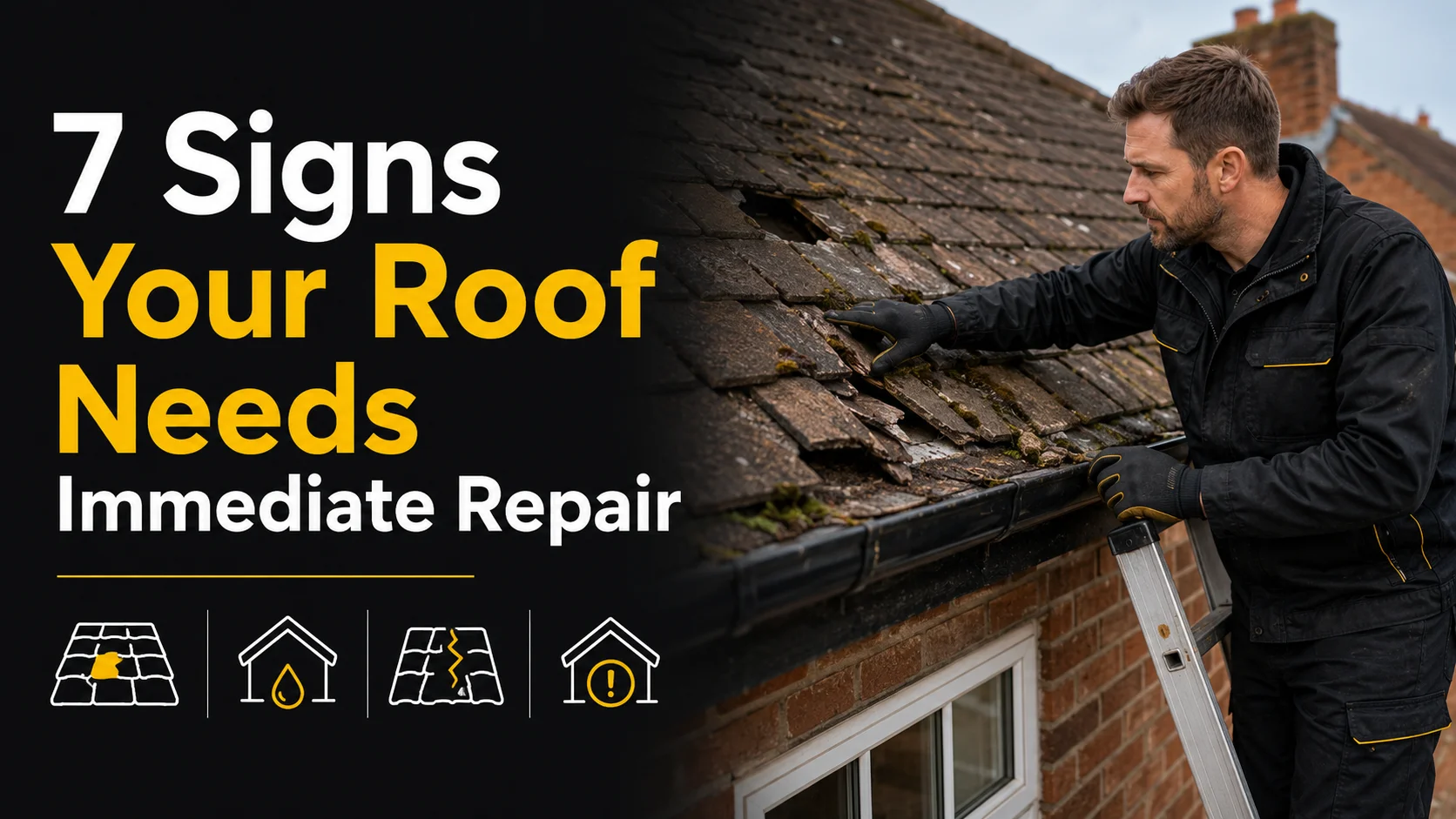
7 Signs Your Roof Needs Immediate Repair Before It Gets Worse
Your roof protects everything beneath it. From heavy rain and strong winds to freezing temperatures, it shields your home from the UK’s unpredictable weather all year round. But like any part of your property, it won’t last forever.
The problem is that roof damage rarely appears overnight. Small issues often develop gradually, and many homeowners don’t notice them until a leak appears or repairs become far more expensive than they needed to be.
Roofing experts consistently advise dealing with warning signs early, as minor defects can quickly lead to structural damage, damp, mould, and higher repair costs. Knowing what to look for can help you act before a simple repair turns into a full roof replacement.
In this guide, we’ll cover the 7 signs your roof needs immediate repair, explain why these problems shouldn’t be ignored, and help you decide when it’s time to call a professional roofer.
Why Early Roof Repairs Matter
Your roof works as a complete system. If one component fails, such as a cracked tile or damaged flashing, water can find its way beneath the surface and affect insulation, timber, ceilings, and even electrical systems.
Ignoring early signs may lead to:
- More expensive repairs
- Damp and mould growth
- Rotten roof timbers
- Damage to ceilings and walls
- Reduced energy efficiency
- Lower property value
Many homeowners only notice roofing issues once water enters the property, but by then, hidden damage may already have occurred. Acting early is usually the safest and most cost-effective approach.
1. Water Stains on Ceilings or Walls
One of the clearest warning signs is finding brown or yellow stains on your ceilings or upper walls.
These marks usually indicate that water has already entered your home through damaged roofing materials, flashing, or underlay. Even if the stain appears dry, it shouldn’t be ignored, as the leak may return during the next period of heavy rain.
Other signs include:
- Peeling paint
- Bubbling plaster
- Damp patches that continue to grow
- Musty odours in upstairs rooms
Rather than simply repainting the affected area, arrange a professional roof inspection to identify the source of the leak.
2. Missing, Cracked, or Slipped Roof Tiles
Roof tiles are designed to protect your home from the elements. When they’re damaged or missing, your roof becomes vulnerable to water ingress.
After periods of strong wind or storms, it’s worth checking your roof from ground level for:
- Missing tiles
- Cracked tiles
- Slipped or uneven tiles
- Loose ridge tiles
Even a single damaged tile can allow rainwater to reach the roof structure underneath. UK roofing specialists consistently identify displaced tiles as one of the earliest signs that repairs are needed.
If you notice visible tile damage, don’t wait for a leak to appear. A prompt repair is often far less expensive than fixing water damage inside your home.
3. Sagging Areas on the Roof
A roof should appear straight and even.
If you notice dips, uneven sections, or a sagging ridge line, it may indicate a more serious structural problem.
Possible causes include:
- Water damage
- Rotten roof timbers
- Failing roof supports
- Long-term moisture exposure
- Excess weight from trapped water or debris
Unlike cosmetic issues, a sagging roof should always be inspected as soon as possible because it may compromise the structural integrity of your home.
4. Damaged Flashing Around Chimneys and Roof Openings
Flashing is the metal material installed around chimneys, skylights, vents, and roof joints to prevent water from entering your property.
Over time, flashing can:
- Crack
- Lift away from the roof
- Corrode
- Become loose during storms
Because flashing protects some of the roof’s most vulnerable areas, even small failures can allow rainwater to penetrate beneath the roof covering.
If you notice gaps around your chimney or signs of water entering near roof openings, arrange an inspection before the problem worsens.
5. Excessive Moss, Algae, or Blocked Gutters
A small amount of moss isn’t always a problem, but heavy growth can hold moisture against your roof, increasing the risk of tile damage and water penetration over time.
Likewise, blocked gutters prevent rainwater from draining properly. Instead, water can back up beneath roof tiles or overflow onto walls and foundations.
Watch out for:
- Thick moss covering roof tiles
- Green algae streaks
- Gutters overflowing during rainfall
- Plants growing from guttering
- Pools of water around downpipes
While cleaning gutters is part of routine home maintenance, persistent blockages or excessive moss may indicate that your roof needs professional attention. Roofing experts recommend addressing these issues before trapped moisture causes more serious damage.
6. Daylight Visible in Your Loft
Your loft can reveal roofing problems long before they’re visible from outside.
On a bright day, switch off the loft light and look carefully towards the roof.
If you can see daylight coming through, there are likely gaps or damaged sections that could also allow rain, wind, and pests to enter your home.
Other warning signs inside the loft include:
- Damp insulation
- Wet roof timbers
- Mould growth
- Dripping water after rain
- Musty smells
These issues shouldn’t be ignored, as they often indicate that the roof’s protective barrier has been compromised.
7. Rising Energy Bills Without Explanation
Many homeowners don’t realise that roof damage can affect their energy efficiency.
Cracks, gaps, damaged insulation, or water ingress can allow heat to escape during winter and make it harder to keep your home comfortable. As a result, your heating system has to work harder, increasing your energy bills.
If you’ve noticed:
- Higher heating costs
- Cold spots in upstairs rooms
- Draughts in the loft
- Rooms that struggle to stay warm
your roof may be contributing to the problem.
Although rising energy bills can have several causes, roof damage is one possibility worth investigating, particularly in older properties.
Roof Repair or Roof Replacement?
Not every roofing issue means you need a completely new roof.
In many cases, replacing damaged tiles, repairing flashing, or fixing a localised leak is enough to restore your roof and extend its lifespan.
However, if your roof has widespread structural damage, repeated leaks, or has reached the end of its expected lifespan, a replacement may be the more cost-effective long-term solution.
If you’re unsure which option is right for your property, read our guide on Roof Repair vs Roof Replacement to understand the differences and when each solution makes sense.
When Should You Call a Professional Roofer?
Some roofing issues can wait for a planned inspection, but others require immediate professional attention.
Contact a roofer as soon as possible if you notice:
- Water leaking into your home
- Missing or slipped roof tiles after a storm
- A sagging roofline
- Damaged flashing around chimneys or skylights
- Daylight visible through your loft
- Overflowing gutters caused by roof deterioration
- Damp patches spreading across ceilings or walls
Ignoring these warning signs can lead to more extensive structural damage and significantly higher repair costs.
If you’re wondering what a repair is likely to cost, our guide on How Much Does It Cost to Repair a Roof? explains the typical costs homeowners can expect.
You can also read our blog on How Much Do Roofers Charge Per Hour? to better understand labour costs before booking a contractor.
Find Trusted Roofing Professionals with The Trade Core
Your roof is one of the most important parts of your home, and even small problems deserve prompt attention. Whether you’ve spotted a leak, missing tiles, damaged flashing, or a sagging roofline, acting early can save you from far more expensive repairs in the future.
TheTradeCore helps homeowners connect with trusted local roofing professionals for inspections, repairs, and complete roof replacements. Our directory makes it easy to find experienced tradespeople who can assess the damage and recommend the right solution.
Looking for a reliable roofer?
Browse trusted Roofing Services through The Trade Core and connect with experienced professionals who can restore your roof before minor issues become major repairs.
Frequently Asked Questions
Can one missing roof tile cause a leak?
Yes. Even a single missing or cracked tile can expose the underlying roof structure to rainwater, increasing the risk of leaks and internal damage if it’s not repaired promptly.
Is moss on a roof always a problem?
Not necessarily. Light moss growth is common, but excessive moss traps moisture, which can damage roof tiles and reduce the roof’s lifespan if left untreated.
How often should I have my roof inspected?
Most roofing professionals recommend a visual inspection at least once a year and after severe storms. Regular inspections help identify small problems before they become expensive repairs.
Should I repair my roof or replace it?
It depends on the extent of the damage. Localised issues such as damaged flashing or a few missing tiles can often be repaired, while widespread structural damage or an ageing roof may require replacement.
Can roof damage increase energy bills?
Yes. Gaps, leaks, and damaged insulation can allow heat to escape, forcing your heating system to work harder and increasing energy costs.
Is it safe to inspect my roof myself?
You should only inspect your roof from the ground or inside your loft if it’s safe to do so. Avoid climbing onto the roof, as damaged surfaces can be unstable. If you suspect a problem, arrange a professional inspection.