

Most homeowners don’t think about their plumbing until something goes wrong. A dripping tap, a slow drain, or slightly lower water pressure may seem like minor inconveniences, but these small issues often develop into expensive repairs when left untreated.
Many professional plumbers agree that serious plumbing emergencies usually begin with warning signs that homeowners ignore for weeks or even months. Catching problems early can prevent water damage, mould growth, structural issues, and costly emergency call-outs.
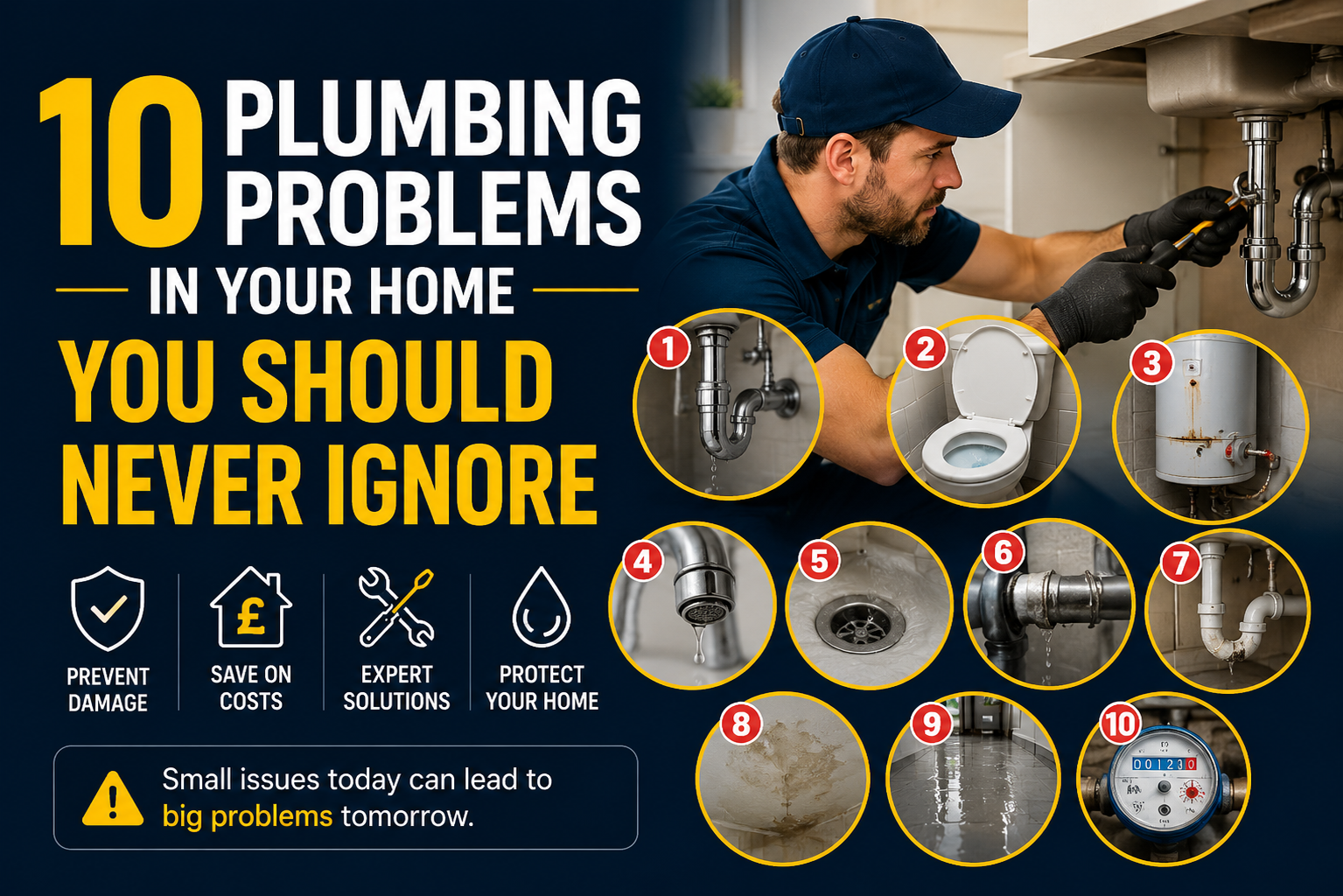
Here are 10 plumbing problems in your home that you should never ignore, along with the times when it’s best to call a professional.
1. A Constantly Dripping Tap
A dripping tap is one of the most common plumbing problems in home, yet it’s also one of the most ignored.
Many homeowners assume it’s simply an annoyance, but every drip wastes water throughout the day and can gradually increase your water bill. In most cases, the cause is a worn washer, damaged cartridge, or failing internal seal.
2. Slow Draining Sinks or Showers
A slow drain rarely fixes itself.
Kitchen sinks often become blocked by grease, food waste, and soap residue, while bathroom drains collect hair and personal care products over time.
Although a single slow drain may simply need cleaning, multiple slow drains around the house could indicate a larger blockage within the drainage system or even the main sewer line.
Warning signs include:
- Water taking longer than usual to drain
- Gurgling noises after using sinks
- Standing water in showers
- Unpleasant smells from plugholes
3. Low Water Pressure Throughout Your Home
Few things are more frustrating than stepping into the shower only to find the water pressure has almost disappeared.
Low pressure may be caused by:
- Hidden leaks
- Pipe corrosion
- Mineral build-up
- Faulty pressure valves
- Problems with the main supply
If the pressure has gradually reduced throughout several rooms, don’t assume it’s “just the way the house is.” Homeowners frequently discover that what seemed like a small inconvenience was actually caused by deteriorating pipework or significant blockages requiring professional attention.
4. Water Stains on Walls or Ceilings
Water stains are one of the clearest warning signs that moisture is escaping somewhere it shouldn’t.
Brown patches, peeling paint, bubbling wallpaper, or damp ceilings often point to hidden leaks inside walls or ceilings. Ignoring these signs allows moisture to spread, increasing the risk of mould, timber rot, damaged insulation, and expensive structural repairs.
5. A Running Toilet
Many people stop noticing the sound of a constantly running toilet after a few days.
Unfortunately, your water meter doesn’t.
A faulty flapper valve, damaged fill valve, or worn internal mechanism can waste hundreds of litres of water every day if left unrepaired.
Professional plumbers frequently identify running toilets as one of the easiest plumbing issues to fix, yet one of the most expensive when ignored due to wasted water.
6. Bad Smells Coming from Drains
Your home shouldn’t smell like a sewer.
Persistent odours coming from sinks, baths, or floor drains often indicate:
- Blocked waste pipes
- Sewer gas escaping
- Dry traps
- Drainage ventilation problems
Ignoring unpleasant smells can allow drainage issues to worsen, particularly if the blockage continues to build deeper within the system.
7. Burst or Leaking Pipes
A burst pipe is one of the most serious plumbing problems a homeowner can face. While some pipes fail suddenly, many give warning signs long before they burst.
Look out for:
- Damp patches on walls or ceilings
- Water stains that continue to spread
- A sudden drop in water pressure
- Unexplained puddles around your property
- Higher-than-normal water bills
8. No Hot Water
Running out of hot water unexpectedly isn’t just inconvenient. It often indicates a problem with your boiler, hot water cylinder, thermostat, heating element, or associated plumbing.
Some warning signs include:
- Water taking longer to heat
- Hot water running out quickly
- Strange noises from the hot water system
- Rust-coloured water
- Water temperature constantly changing
Ignoring these symptoms can lead to complete system failure, which is usually far more expensive than addressing the issue early. Which? reports that boiler problems are among the most common home issues that become costly because homeowners delay repairs.
9. Overflowing or Frequently Blocked Toilets
A toilet that regularly blocks isn’t normal.
Occasional blockages happen, but repeated overflows usually point to a larger issue within your drainage system.
Common causes include:
- Excessive toilet paper
- “Flushable” wipes
- Tree root intrusion
- Damaged drainage pipes
- Sewer line blockages
Repeatedly using chemical drain cleaners or plunging without finding the real cause may only provide temporary relief.
10. Unusually High Water Bills
Many homeowners only realise they have one of the most expensive plumbing problems after opening their monthly water bill.
If your water usage hasn’t changed but your bill has increased noticeably, hidden leaks should be one of the first things you investigate.
WaterSafe recommends checking your water meter, toilets, taps, outside taps and visible pipework when trying to identify a hidden leak. Even a slow leak can waste a surprising amount of water over time.
Why Acting Early Saves Money
One thing almost every experienced plumber agrees on is that small plumbing issues rarely stay small.
A minor leak can become water damage.
A slow drain can become a blocked pipe.
Low water pressure can reveal corroded plumbing.
For homeowners wondering what a repair might cost, our guide on Plumber Cost in the UK: Average Prices & Call Out Fees explains typical pricing for common plumbing jobs. If you’re looking for a trusted local professional, you can also read our Local Plumbing Services Guide before booking a plumber.
When Should You Call a Professional Plumber?
Some minor issues can be monitored for a short time, but you should contact a plumber immediately if you notice:
- Burst or leaking pipes
- Water stains spreading across walls or ceilings
- Multiple blocked drains
- Sewage smells inside your home
- No hot water
- Very low water pressure throughout the property
- Overflowing toilets
- Water leaking around your boiler or hot water system
If you’re unsure who to hire, our guide on How to Hire Reliable Tradesperson in UK Without Getting Scammed explains how to choose qualified professionals and avoid unreliable contractors.
Find Trusted Plumbing Professionals with The Trade Core
Whether you’re dealing with a leaking pipe, blocked drain, running toilet or low water pressure, acting quickly can save hundreds or even thousands of pounds in future repairs.
Looking for a reliable plumber?
Browse trusted plumbing services through The Trade Core and get connected with experienced professionals who can diagnose and fix the problem before it becomes a costly emergency.
CTA Button:
Frequently Asked Questions
Can a small plumbing leak become a serious problem?
Yes. Even a slow leak can cause damp, mould, damaged plaster, timber rot and higher water bills if left untreated. Identifying leaks early helps prevent costly repairs.
What is the most common plumbing problem in UK homes?
Some of the most common plumbing problems include dripping taps, blocked drains, running toilets, leaking pipes, low water pressure, and hidden water leaks.
How do I know if I have a hidden water leak?
Signs include damp patches, peeling paint, mould, musty smells, reduced water pressure and unexpectedly high water bills. You can also monitor your water meter when no water is being used to help identify hidden leaks.
Should I ignore low water pressure?
No. While it can sometimes be caused by local supply issues, persistent low pressure may indicate leaking pipes, mineral build-up, or ageing plumbing that requires professional inspection.
When should I call an emergency plumber?
Call an emergency plumber if you have a burst pipe, major leak, overflowing toilet that won’t stop, sewage backing up, or significant water escaping into your home.
How often should household plumbing be inspected?
For most homes, a professional plumbing inspection every one to two years is a sensible preventative measure. Older properties or homes with recurring plumbing issues may benefit from more frequent inspections.