

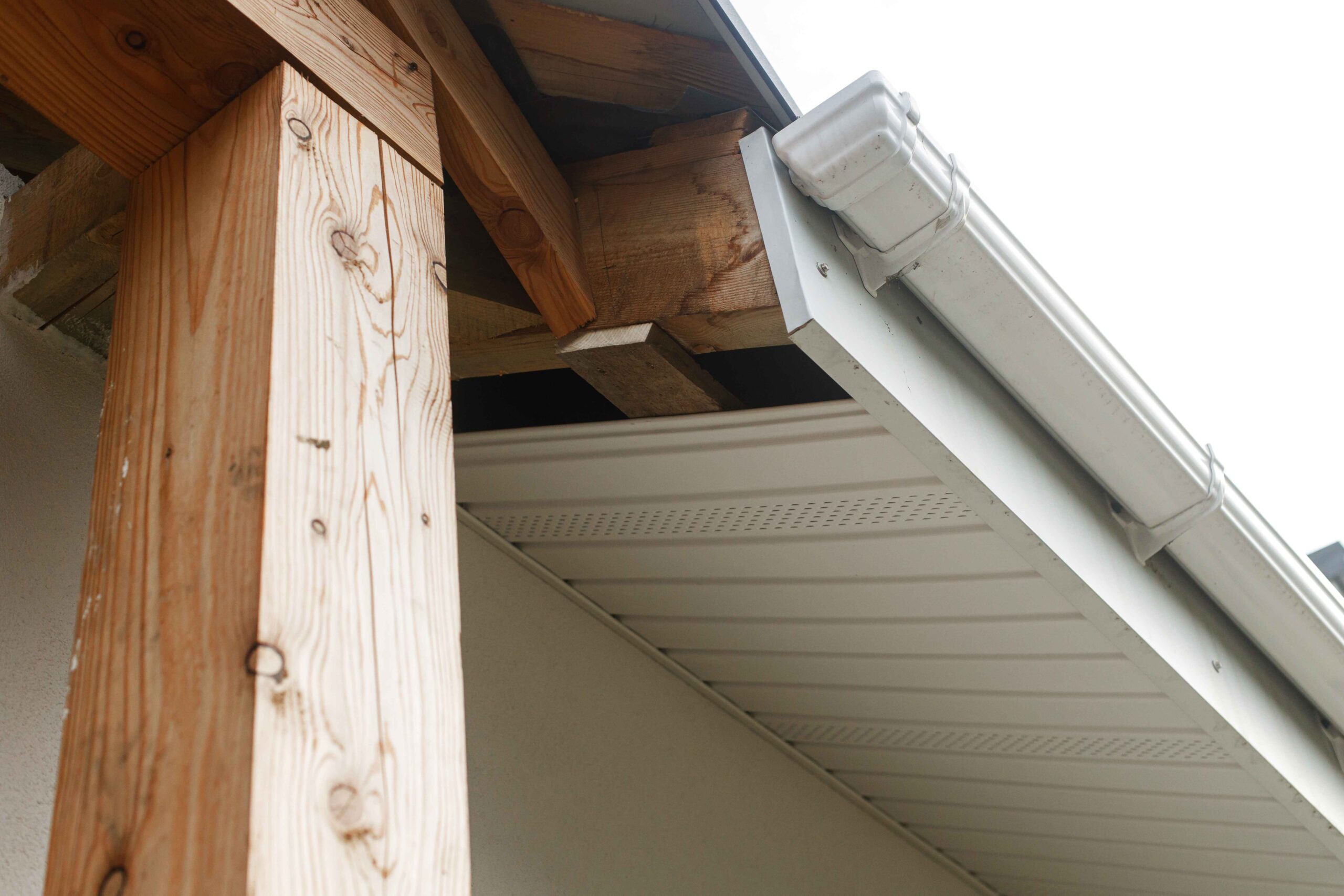
Soffit and fascia are small parts that do a big job in protecting your roof, walls, and ventilation. The major difference between fascias and soffits is their placement. Soffits are placed under the roof’s edge, while fascias are long, horizontal boards at the edge of your roof.
These are parts that most UK homeowners overlook. They protect your home from the elements, improve air circulation, and keep everything running smoothly. But what matters the most is the installation that lasts. The Trade Core helps you connect with reliable fascia and soffit installers in the UK.
Knowing the difference between fascias and soffits is the starting point. This blog tells you all about soffit and fascia in detail so you can make an informed decision.
What is a Soffit and Fascia?
Let’s break down the roofline components most homeowners forget.
Soffit
You might’ve seen it, but don’t know its name. The panel under the roof edge is called a soffit. It helps cover the gap under the roof and increases ventilation to allow better airflow.
Soffits are visible from street level, and they change the look of your roof. They are also a way to enhance the exterior of your home. Soffits are commonly used for the main roof, but they can be fitted under porches and flights of stairs as well. Here is a list of what a soffit is used for:
- Soffit boards protect your roof’s underside from weather, pests, and moisture.
- They prevent rot and mould.
- They provide attic ventilation to regulate temperature.
- Soffit panels reduce energy costs.
- They seal the gap between walls and rooflines.
- They are a great addition to improve overall roof life.
Fascia
Fascia is another important part of the roof that is often overlooked. It’s a straight board that runs along the roof edge. Your gutters are attached to it. It works great in supporting the gutter and protecting the roof edge.
Fascia boards work with soffits to help keep your rafter ends safe from moisture caused by rain, snow, or ice, which can lead to dampness or rot if they are left unprotected. There are a lot of materials available for a fascia that can complement your home’s architecture and add character to your home. Here’s a quick rundown of what a fascia board does:
- They protect your home from water damage, pests, and debris.
- Fascias provide essential support for guttering.
- They improve the home’s exterior look.
- Installing fascia for flat roof structures improves the overall system.
- Seal exposed rafter ends and direct water from walls and foundations.
- Building fascia ensures proper water management and ventilation.
Why Install Fascias and Soffits?
The major difference between fascias and soffits is their placement to support a roof’s structure. But there’s more to it:
- Soffits and fascias are roofline components that protect your roof against moisture and weather damage. They play a key role in protecting the roof from water damage, which could weaken it and limit its lifespan.
- Fascia and soffit panels of high quality ensure you need less maintenance and roof repair.
- Moisture is a very big challenge that causes structural and water damage. This leads to mould and rot, which can be costly to repair. Installing soffit and fascia can reduce these risks.
- Securing your roof with vented soffits helps regulate temperature and improve airflow. They can be used as an energy-efficient solution to prevent condensation in your attic or loft.
- Both of these components upgrade the look of your roof and even improve your property’s exterior.
- Fascias are essential to guide rainwater away from your roof and reduce the risk of leaks.
- Soffits help in pest control. They block small birds or mice from settling into your roof space.
Are Fascias and Soffits Easy to Install?
Yes! They are easy to install because they are lightweight and easy to handle. However, you need to prepare carefully. Removing old materials and gutters helps you prep the surface for a straight installation. You’ll need to consider safety because you’ll be working with ladders at a height. The hardest part of installing fascias and soffits is getting clean junctions and corners.
Hire a tradesperson to handle the job instead of doing it yourself. Your inexperience could risk a fall or property damage.
How Much Does It Cost to Install Fascia and Soffit in the UK?
You might be wondering, “How much does soffit and fascia cost?” UK homeowners should expect the cost to be between £1,500 and £3,500 for complete soffit and fascia installation. But here’s what affects the price the most:
- Length of the roofline you’re replacing.
- Roof accessibility and height.
- The type of material you choose for the fascia or soffit.
- Other things that might increase the prices are guttering replacements, vents, repairs, and waste removal.
Are Fascia and Soffits Necessary?
Once you know the difference between fascias and soffits, their benefits, and why they need to be installed, it’s easier to decide if they are necessary or not. But to conclude, they are absolutely necessary. Their placement and usage make them an important part of any UK home.
They provide better attic ventilation, protect against pests and moisture, and give your roofline a finished look. Fascias and soffits are often overlooked, but they are a small price to pay for a long-lasting roof. Find your soffit and fascia installer through The Trade Core right away!