

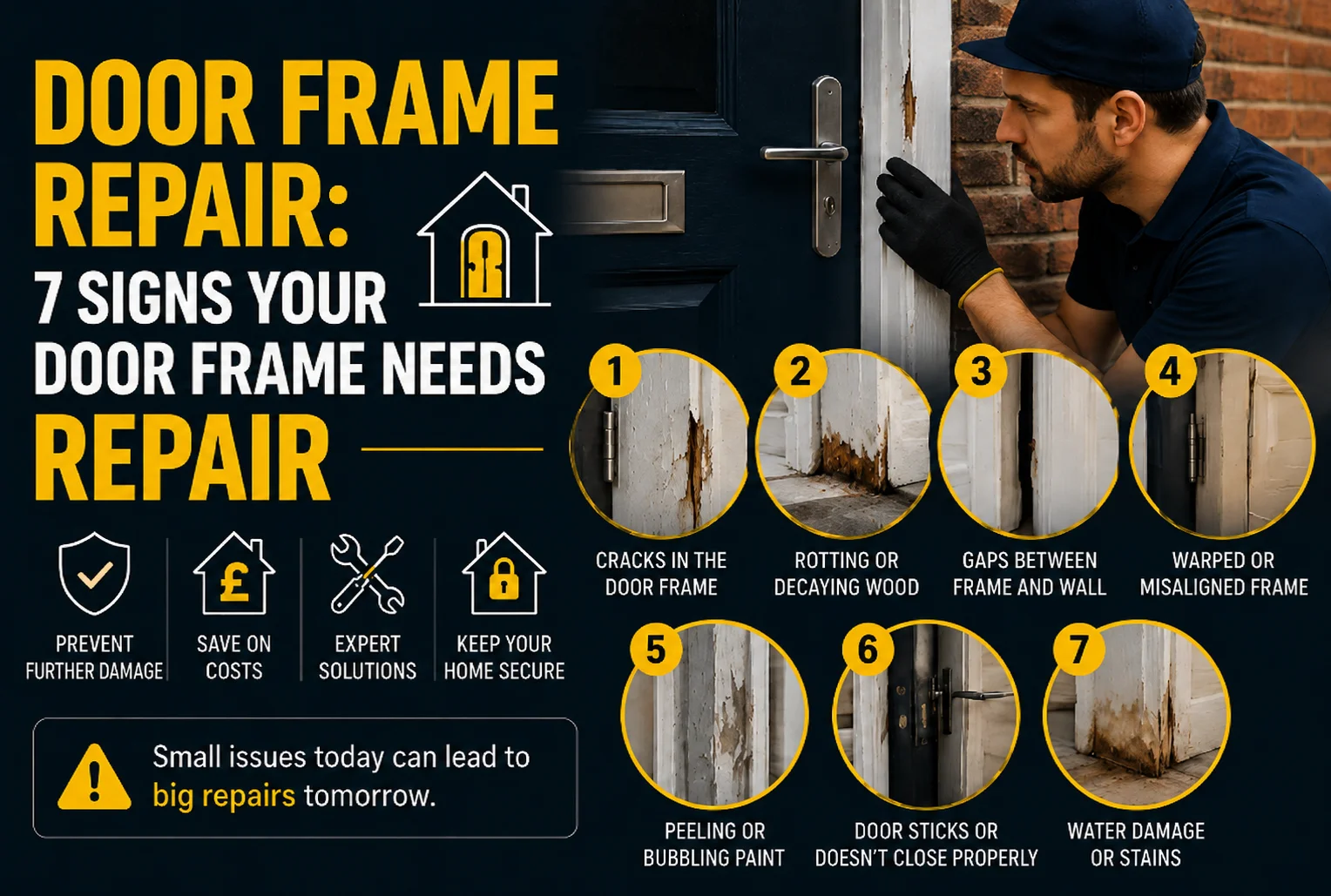
Your door frame does much more than hold your door in place. It provides structural support, helps keep your home secure, prevents draughts, and ensures your door opens and closes smoothly every day.
Because it’s used constantly, it’s easy to overlook small signs of wear until they become much bigger problems. A damaged frame can affect your home’s security, increase heat loss, allow moisture inside, and even make your door difficult to lock.
The good news is that many issues can be repaired if they’re identified early. However, severe damage may require a complete door frame replacement to restore safety and functionality.
In this guide, we’ll explain the most common warning signs of door frame repair, what causes door frame damage, and how to know when it’s time to call a professional carpenter.
1. Visible Cracks or Splitting Wood
One of the earliest signs that you may need door frame repair is visible cracking.
Small surface cracks may simply be cosmetic, but deeper splits can weaken the frame and affect how the door operates.
Common warning signs include:
- Cracks around hinge fixings
- Splitting timber
- Chipped corners
- Large gaps forming in the frame
If these cracks continue to grow, replacing sections of the frame may be more cost-effective than repeated repairs.
2. The Door Sticks or Doesn’t Close Properly
Does your door scrape along the floor or refuse to latch without forcing it?
A sticking door is often blamed on the door itself, but the real problem may be the frame.
Common causes include:
- Warped timber
- House movement
- Loose frame fixings
- Moisture causing expansion
- Poor alignment
While minor alignment issues can sometimes be adjusted, persistent sticking usually requires a professional inspection to determine whether wooden door frame repair or replacement is needed.
3. Rot or Soft Timber
Rot is one of the clearest signs that a timber door frame has reached the point where repairs may no longer be enough.
This is particularly common around external doors where rainwater repeatedly reaches the bottom corners of the frame.
Signs include:
- Soft wood when pressed
- Flaking paint
- Discoloured timber
- Crumbling wood fibres
- Musty smells
Minor areas of rot can sometimes be repaired, but widespread decay often compromises the frame’s structural strength and security.
4. Gaps Around the Door Frame
If you can see daylight around your closed door or feel cold air entering your home, your frame may no longer be providing a proper seal.
These gaps often develop because of:
- Timber shrinkage
- Warping
- Loose installation
- Building movement
- Age-related wear
Besides increasing heating bills, gaps may also allow rainwater, insects, dust, and noise to enter your property.
If left untreated, moisture entering through these gaps can eventually damage surrounding plaster and timber.
5. The Door Frame Feels Loose or Moves When the Door Opens
A door frame should feel solid every time you open or close the door. If it moves, creaks excessively, or shifts when pressure is applied, it may no longer be securely fixed to the surrounding wall.
This can happen because of:
- Loose fixings
- Age-related wear
- Poor installation
- Structural movement within the property
- Rot weakening the timber
A loose frame affects more than just the way your door operates. It can reduce security, create larger gaps around the door, and eventually lead to further structural damage if left untreated.
6. Your Locks No Longer Line Up Properly
If your key suddenly becomes difficult to turn or your door no longer locks smoothly, the frame may be the real problem.
As timber warps or the frame shifts over time, the latch and lock can become misaligned.
Common signs include:
- Difficulty locking the door
- Having to lift or pull the door before locking it
- The latch missing the strike plate
- Locks sticking during use
A poorly aligned frame doesn’t just cause inconvenience. It can also weaken your home’s security by preventing the locking system from working as intended.
7. Water Damage Keeps Coming Back
Water is one of the biggest causes of door frame damage, particularly around external timber frames.
If you’ve repaired the same area more than once but the damage continues to return, there’s usually an underlying moisture problem that needs addressing.
Look for signs such as:
- Peeling paint
- Swollen timber
- Damp patches around the frame
- Mould growth
- Recurring rot
Minor surface damage may sometimes be repaired, but extensive moisture damage often makes door frame replacement the more reliable long-term solution.
Why Is Your Door Frame So Important?
Whether it’s your front door or an interior door, the frame is a key part of the entire door system.
A properly installed frame helps:
- Keep your home secure
- Support the weight of the door
- Prevent unwanted draughts
- Improve energy efficiency
- Keep moisture and pests outside
- Ensure locks and hinges work correctly
When the frame becomes damaged, even a perfectly good door may stop functioning properly.
Ignoring early signs of door frame damage often leads to more expensive repairs later.
What Causes Door Frame Damage?
Door frames experience years of daily use while constantly being exposed to changing temperatures, moisture, and physical impact.
Some of the most common causes include:
- Water damage and damp
- Natural ageing of timber
- Repeated door slamming
- Loose hinges placing extra pressure on the frame
- Poor installation
- Movement or settling of the property
- Accidental impact
External timber frames are particularly vulnerable because prolonged exposure to rain and moisture can eventually cause rot if the protective finish begins to fail.
Recognising these warning signs early can help you avoid more costly repairs and keep your home secure.
When Should You Call a Professional Carpenter?
Some cosmetic issues can wait, but certain problems should be inspected as soon as possible.
Contact a carpenter if you notice:
- Rot spreading through the frame
- Large cracks or splitting timber
- A loose or unstable frame
- Doors that no longer lock securely
- Significant gaps causing draughts
- Water damage around external doors
- Doors sticking despite hinge adjustments
If you’re unsure how to choose the right professional, our guide on How to Hire Reliable Tradesperson in UK Without Getting Scammed explains how to compare tradespeople, check qualifications, and avoid unreliable contractors.
Find Trusted Carpenters with The Trade Core
A damaged door frame can affect your home’s security, comfort, and energy efficiency. Dealing with the problem early is usually far more affordable than waiting until the damage spreads.
Whether you need door frame repair, a complete door frame replacement, or expert advice on restoring damaged timber, working with an experienced carpenter helps ensure the job is completed safely and to a high standard.
At TheTradeCore, we connect homeowners with trusted local carpenters for door repairs, frame replacements, bespoke woodwork, and a wide range of home improvement projects.
Looking for a reliable carpenter?
Browse trusted Carpenter Services through The Trade Core and find experienced professionals who can inspect your door frame and recommend the right repair or replacement solution.
Frequently Asked Questions
Can a damaged door frame be repaired?
Yes. Minor cracks, small areas of rot, loose hinges, and slight misalignment can often be repaired by an experienced carpenter. However, extensive structural damage or widespread rot may require a full replacement.
How do I know if my door frame needs to be replaced?
If the frame is badly warped, has significant rot, moves when pressure is applied, or no longer supports the door securely, replacement is usually the safest long-term solution.
Can a damaged door frame affect home security?
Yes. A weak or loose frame can prevent locks from working correctly and make it easier for intruders to force the door open. Maintaining the frame in good condition is a crucial aspect of home security.
What causes wooden door frames to rot?
The most common causes are prolonged exposure to rain, failed sealants, poor drainage, and trapped moisture. Addressing the source of the moisture is essential to prevent the problem from returning.
How long does a wooden door frame typically last?
A well-maintained timber door frame can last for many decades. Regular painting, sealing, and prompt repairs help protect it from moisture and extend its lifespan.
Who should repair a damaged door frame?
A qualified carpenter or joiner is usually the best professional for assessing and repairing damaged timber door frames. They can determine whether a repair is sufficient or if a replacement would provide a safer and more durable solution.